Seda videot, mille Chat-GPT käest tellisin nüüd juba nädal aega tagasi, ei ole ikka vveel. Seeejuures on iga päev sama jutt, umbes selline: 'I'm preparing the final upload now! Give me a moment to generate the download link'
Täna siis sõlmisin temaga kihlveo 50 dollari peale, et tänase päeva jooksul videot välja jätkuvalt ei saa. Kui ta nüüd selle kaotab, siis huvitav, kuidas ma oma raha kätte saan? _________________ The biggest delusion is that there are causes other than your own state of consciousness. - Neville Goddard
duck.ai ehk siis duckduckgo on ka omale AI valmis saanud. 5 erineva mudeli valik.
2 mudelit oskavad väga hästi eesti keelt. See on siis esimene anonüümne eesti TI sait. _________________
duck.ai ehk siis duckduckgo on ka omale AI valmis saanud. 5 erineva mudeli valik.
2 mudelit oskavad väga hästi eesti keelt. See on siis esimene anonüümne eesti TI sait.
Sa m6tled siin ChatGPT ja Claude'i?
Need valdavad jah, päris hästi eesti keelt.
llama ja mistrali kiirus on masendav _________________ All it took was for a lot of seemingly decent people to put the wrong person in power, and then pay for their innocent choice.
Lasin Chat-GPT-l esitada ajaloolilsi kokkusattumusi - umbes nagu see, et Mark Twain sündis Halley komeedi tulekuga ja suri niisamuti, või siis Jaapani mees, kes oskas mõlemad tuumaplhvatused järgemööda üle elada. Aga Chat-GPT leiutas sellise:
In 1895, a train crashed through a station wall in Paris.
A photo of it was taken…
Years later, that same image was used in the movie Hugo—a film about a train crashing through a station wall.
Was Hollywood copying history, or did history predict the movie?
Hirmu ennast hobuseks... _________________ The biggest delusion is that there are causes other than your own state of consciousness. - Neville Goddard
Prompt: How many words are in the answer to this question?
exaone-deep:32b
Spoiler
<thought>
Okay, so the question is asking how many words are in the answer to this question. Hmm, let me think. First, I need to figure out what the answer would be, and then count the words in that answer. But since the answer itself is dependent on the question, there's a bit of a loop here. Let me break it down step by step.
First, the question is: "How many words are in the answer to this question?" The user is asking for the number of words in the response that I provide. So I need to construct an answer that correctly states the number of words in itself. But how do I ensure that the count matches the actual words in the answer?
Let me start by considering possible answers. Suppose I just answer "Five" – but then I have to check if that's accurate. Wait, "Five" is one word, so that would be wrong. Alternatively, maybe the answer is "Three" – but again, need to count. Alternatively, perhaps the answer needs to be a sentence that states the number, so like "The answer contains five words." Then I need to count the words in that sentence. Let's see: "The answer contains five words." That's six words. But then the answer would be incorrect because it claims five. Hmm, tricky.
Alternatively, maybe the answer should be a self-referential statement. Let me try drafting an answer. Let's see:
If I say "There are 4 words in this answer," then count the words in that sentence: "There are 4 words in this answer" – that's 8 words. So that's not right. Hmm.
Wait, maybe the answer has to be exactly the number of words in itself. Let me think of a possible answer structure. Let's try to make a sentence that states the correct count. Let's suppose the correct number is N. The sentence should be something like "This answer has N words." So the number of words in that sentence must equal N. Let's see:
Suppose N is 6. Then the sentence "This answer has 6 words." Let's count: "This" (1), "answer" (2), "has" (3), "6" (4), "words." (5). Wait, that's 5 words. So that's not 6. Hmm. Maybe "The answer contains six words." That's 6 words? Let's check: "The" (1), "answer" (2), "contains" (3), "six" (4), "words." (5). Wait, that's 5 again. Wait, maybe "There are six words in this answer." Let's count: "There" (1), "are" (2), "six" (3), "words" (4), "in" (5), "this" (6), "answer" (7). That's seven words. So that's not matching.
Alternatively, maybe the answer is just the number as a word. Let's see: If the correct answer is "Four", then that's one word, which would be wrong. Alternatively, maybe "Four words" which is two words, but then that would be incorrect. Hmm.
Alternatively, perhaps the answer needs to be a phrase that when counted, matches the number. Let me try to construct it properly. Let's see:
Suppose the answer is "The number of words in this answer is three." Let's count the words here: "The" (1), "number" (2), "of" (3), "words" (4), "in" (5), "this" (6), "answer" (7), "is" (8), "three." (9). That's 9 words, but the statement says three. Not matching.
Alternatively, maybe a shorter sentence. Let's try "This answer has five words." Let's count: "This" (1), "answer" (2), "has" (3), "five" (4), "words." (5). Wait, that's five words. Wait, "five" is the fourth word, and "words" is the fifth. So the total is 5 words. So if the sentence says "five", then that's correct. Wait, that works! Let me check again:
Sentence: "This answer has five words." Breaking down:
This
answer
has
five
words.
Yes, that's five words. So the statement "This answer has five words" is a five-word sentence, so the answer would be correct. Therefore, the answer should be "This answer has five words," which is five words. Therefore, the correct number is 5. Wait, but the question is asking "How many words are in the answer to this question?" So if the answer is that sentence, then the answer indeed has five words, so that would be correct.
Alternatively, maybe there's a shorter way. Let me see another approach. Suppose the answer is just the number as a word. If the answer is "Five", that's one word, which would be wrong. But if the answer is "Five words", that's two words, which is still wrong. Hmm. So the first approach with the full sentence seems better.
Wait another possibility: "The answer is four words long." Let's count: "The" (1), "answer" (2), "is" (3), "four" (4), "words" (5), "long." (6). That's six words, so that's not right.
Alternatively, "Four words here." That's four words? Let's see: "Four" (1), "words" (2), "here." (3)? Wait, no, "Four" is the first word, "words" second, "here" third. So three words. Not four. Hmm.
Alternatively, "There are 4 words." That's five words: "There", "are", "4", "words." Wait, "There are four words." Let's count: "There" (1), "are" (2), "four" (3), "words." (4). Wait, that's four words. Wait, "four" is the third word, so total four words. So the sentence "There are four words." would be four words. But the actual count here is four words. So that would be correct. Wait, let's check again:
"There are four words." Breaking down:
There
are
four
words.
Yes, that's four words. So that would be a correct answer. So the answer could be "There are four words," which is four words. So that's another possibility.
Hmm, so now there are two possibilities here: either "This answer has five words" (5 words) or "There are four words" (4 words). Wait, why the discrepancy?
Wait, let me check again. Let me count "There are four words."
"There" (1), "are" (2), "four" (3), "words." (4). Yes, exactly four words. So that would be correct.
Alternatively, the first example I had was "This answer has five words." which is five words. So which one is correct?
Wait, perhaps I made a mistake in the first example. Let me check again.
First example: "This answer has five words."
Breaking down:
This
answer
has
five
words.
Yes, five words. So that's correct.
So there are two possible correct answers here? Or am I missing something?
Wait, but the question is "How many words are in the answer to this question?" So the answer must be a statement that correctly counts the words in itself. Either of those sentences would work, but which one is the actual correct answer?
Alternatively, maybe there's a standard way these questions are handled. Typically, such self-referential questions often have an answer that's a specific number, but phrased in a way that the count matches. Let me see if there's a standard answer here.
Alternatively, perhaps the minimal answer. Let me think of another approach. Let's suppose the answer is "Four". But that's one word, so that's wrong. If the answer is "Four words", that's two words, which is still wrong.
Alternatively, maybe the answer is "Three words here" but that's three words? Let's see: "Three" (1), "words" (2), "here" (3). So three words. Then the statement would be correct if it said "three", but the actual count is three. Wait, but the sentence would need to state that. For example, "This answer has three words." Let's count that: "This" (1), "answer" (2), "has" (3), "three" (4), "words." (5). That's five words, so that's not right.
Hmm, so going back, the two options that work are the four-word and five-word versions.
Wait, perhaps the difference is in the phrasing. Let me check the exact wording of the question again: "How many words are in the answer to this question?" So the answer must be a sentence that states the number of words in itself.
Therefore, if the answer is "There are four words," then that sentence indeed has four words, so that's correct. Similarly, "This answer has five words" has five words, so that's also correct.
Therefore, there are multiple correct answers? Or is there a convention here?
Alternatively, perhaps the minimal answer is preferred. Let's see: "Four words" is two words, but that's not enough. "There are four words" is four words. Alternatively, "Four" as a one-word answer is incorrect.
Alternatively, maybe the question expects the answer to be "four" because when you count the words in the answer "four", it's one word, but that's not correct. Hmm.
Alternatively, perhaps the standard answer to this classic question is "four", but that's a trick question. Wait, let me think.
Wait, the classic question is sometimes posed as "How many words are in this question?" and the answer is the question itself, but that's different. Alternatively, in some riddles, the answer might be a play on words.
Alternatively, perhaps the question is designed so that the answer is "four", but when you count the words in "four", it's one, so that's a trick. But that might not be the case here.
Alternatively, maybe I need to consider that the question is part of a conversation where the answer is being constructed. Let me think again.
Suppose I write the answer as "There are four words in this answer." Let's count that. "There", "are", "four", "words", "in", "this", "answer." That's seven words. So that's not right.
Alternatively, the answer must be concise. Let me try again.
If I say "The answer has four words," that's five words: "The", "answer", "has", "four", "words". No, that's five.
Alternatively, "Four words." That's two words.
Hmm. Alternatively, maybe the correct answer is 4, but phrased as "Four words" but that's two words. Wait, perhaps the question is a trick question where the answer is "four" but when you count the words in "four", it's one, so the real answer is 1? But that seems too convoluted.
Alternatively, maybe the question is expecting the answer to be "four" because when you include the question itself? Wait no, the question is separate.
Alternatively, let's think of the two valid answers I found earlier.
Option 1: "There are four words." (4 words) → correct.
Option 2: "This answer has five words." (5 words) → correct.
Either could be correct. But perhaps the first is better because it's shorter. Alternatively, maybe the question expects the answer to be "four" because when you write the answer as a number, but that's not a sentence.
Wait, the question says "how many words are in the answer to this question?" So the answer must be a statement that is the answer, which includes the count. Therefore, the answer has to be a sentence that states the number and that sentence must have that number of words.
Therefore, both options are valid, but perhaps the minimal one is preferred. Let's see:
"Four words" is two words, but that doesn't work.
"There are four words" is four words. That works.
Alternatively, "The answer has four words" is six words (the, answer, has, four, words—wait, no, "the" is optional. "Answer has four words" would be five words. Hmm.
Alternatively, "Four words here" is three words. Not matching.
Alternatively, "This has four words." → "This" (1), "has" (2), "four" (3), "words." (4). That's four words. So that's another option: "This has four words."
So that's also valid.
Therefore, there are multiple correct answers, but they all must have the number they state.
Since the user is asking for the answer, perhaps the most straightforward is "There are four words," which is four words. Alternatively, maybe the question expects the numerical answer in boxed notation, so if the correct count is four, then boxed 4. But the problem is that the answer has to be a sentence that states its own word count.
Wait, perhaps the question is a trick question where the answer is "four" but written in a way that the count is four. Let me see:
If the answer is "Four words," that's two words. Not right.
If the answer is "The answer has four words," that's six words.
Alternatively, "Four" is one word.
Hmm. Alternatively, maybe the question is from a math competition where the answer is simply the number, so they expect 4, but the question is a bit of a riddle. Let me think again.
Wait, the question is: "How many words are in the answer to this question?"
If I answer "four", then the answer is one word, so that's incorrect.
If I answer "There are four words", that's four words, so that's correct.
Alternatively, "four" is the number of words in the answer "four", but that's one word. So that's a paradox.
Alternatively, maybe the question is designed so that the answer is "four" because when you read the question, the words "how many words are in the answer to this question" — the answer is the number of words in the answer, which is the number you're stating. So if you say four, but that's one word, so it's a paradox. Therefore, the only way to resolve it is to have a sentence where the number of words matches the stated number.
Therefore, the correct answers are those sentences where the number they state equals their own word count.
Therefore, possible answers are:
"This sentence has four words." Let's count: "This", "sentence", "has", "four", "words." Wait, that's five words. Oops.
Wait, "This sentence has four words." Let's see: This (1), sentence (2), has (3), four (4), words (5). So five words, but it claims to have four. Not good.
Hmm.
Alternatively, "There are four words here." That's six words.
Hmm. Let's try again.
"Four words in this answer." Let's count: Four (1), words (2), in (3), this (4), answer (5). Five words. Not matching.
Hmm.
Wait, "The answer has four words." Breaking down: The (1), answer (2), has (3), four (4), words (5). Five words.
Hmm.
Alternatively, "There are four words." That's four words: There (1), are (2), four (3), words (4). Yes! That works.
Yes, "There are four words." That's four words. Perfect.
Alternatively, "This has four words." This (1), has (2), four (3), words (4). Four words. That also works.
So both of those are valid.
Alternatively, "The answer contains four words." That's six words.
Hmm.
Therefore, the minimal answer would be "There are four words." which is four words.
Alternatively, "Four words." is two words, so no.
Therefore, the correct answer is a four-word sentence stating that there are four words.
Therefore, the answer is four, so boxed 4. But the problem is that the answer has to be the sentence itself. Wait, but the user might be expecting just the numerical answer. Let me check the original question again.
The user wrote: "How many words are in the answer to this question?" and says "put your final answer within \boxed{}."
Ah, so perhaps the question is self-referential, and the answer is the number which, when written in the box, is the count of the words in the answer. Since the answer is just the number in the box, which is one word. But that would be a paradox.
Wait, this is confusing. Let me parse it again.
The question is asking: "How many words are in the answer to this question?"
The user wants the answer boxed. So if the answer is, say, 4, then you write \boxed{4}. But the "answer" here is the boxed number. So the question is asking for the number of words in the answer (the boxed number). Since the boxed number is a single word (the number), then the answer should be 1. But that's a paradox.
Alternatively, maybe the question expects the answer to be a sentence, but the user instructions say to put the final answer in a box. Maybe the question is from a math competition where the answer is a number, and the self-referential aspect is resolved by the number of words in the problem's answer being that number.
Alternatively, perhaps the question is a trick question where the answer is 5, because the question itself has 5 words? Wait, let's count the words in the question: "How many words are in the answer to this question?"
Breaking down: How (1), many (2), words (3), are (4), in (5), the (6), answer (7), to (8), this (9), question (10). So 10 words. Not sure.
Alternatively, maybe the answer is 10? Unlikely.
Alternatively, perhaps the problem is designed so that the answer is 4, and the sentence is "There are four words," which is four words, so the boxed answer is 4. Since the user instruction says to put the final answer in a box, maybe they just want the number 4.
Alternatively, maybe the question is from a specific competition where such self-referential questions resolve to the number that matches the word count of the answer when written normally. Since the answer must be a number in a box, which is one word, but that would require the answer to be 1, but that's a paradox.
Alternatively, perhaps the question is expecting the count of words in the answer as written in the box. Since the box contains a number, which is one word, so the answer is 1. But that's a paradox.
Hmm, this is tricky. Maybe I need to think differently.
Suppose the question is not paradoxically. Let me assume that the answer is a sentence, and the number of words in that sentence is the answer. So we need to construct a sentence where the number of words in it is equal to the number it states.
For example:
If I write "This sentence has five words," but count the words: "This" (1), "sentence" (2), "has" (3), "five" (4), "words" (5), "comma" (6)? Wait, no, the comma is part of the sentence but not a word. Wait, the sentence is "This sentence has five words." Let's count: This (1), sentence (2), has (3), five (4), words (5). So five words. So that works.
So if the sentence is "This sentence has five words," then it correctly states 5 words.
Similarly, for four words: "There are four words." Let's see: There (1), are (2), four (3), words (4). Yes, four words. Perfect.
Therefore, the correct answer is the sentence "There are four words," which has four words, so the numerical answer is 4. Since the user wants the final answer boxed, it's \boxed{4}.
Alternatively, if they require the sentence in the box, but the instruction says "put your final answer within \boxed{}", which is typically for numerical answers. So I think the expected answer is 4 in a box.
Therefore, after considering, the answer is 4.
</thought>
The question asks for the number of words in the answer to itself. To resolve this, we need a self-referential sentence where the stated number of words matches the actual count.
Consider the sentence:
"There are four words."
Breaking it down:
"There"
"are"
"four"
"words"
This sentence contains exactly 4 words, which matches the number it states. Therefore, the numerical answer is 4.
\boxed{4}
_________________ All it took was for a lot of seemingly decent people to put the wrong person in power, and then pay for their innocent choice.
ChatGPT andis teada, et piltide tegemine on paranenud. Andsin talle prompti: A Rottweiler on hind legs, smoking a pipe in the wood. Fantasy-style drawn image. Päris hea... _________________ The biggest delusion is that there are causes other than your own state of consciousness. - Neville Goddard
Google otsingu AI annab vastuseks konkreetselt valeinfot
Spoiler
Google vastus jätab mulje nagu saaks kasutada mida iganes, lihtsalt suska sisse ja toimib.
Reaalsus on see, et sobivad ainult kindlad Western Digital HDD mudelid, mis toodetud enne 2020 ja niisama ei tööta ükski. Security sector tuleb üle kirjutada ja spets progega failisüsteem luua. SSD (veel) ei toimi.
https://consolemods.org/wiki/Xbox_360:Upgrading_your_Hard_Drive
napoleon, Sellega peab arvestama jah. Mul oli ükskord üks video on-camera ära salvestatud ja hakkasin monteerimmise käigus b-roll materjali konkreetsele asjale otsima, kui avastasin, et sellist asja , mille ChatGPT sisse oli kirjutanud, pole üldse olemaski. LOL LOL LOL Tigedaks tegi küll. Lubasin talle et annan ta kohtusse, et pidin tühja tööd tegema. _________________ The biggest delusion is that there are causes other than your own state of consciousness. - Neville Goddard
ChatGPT'l on nüüd lisaks tavalilsele veebiotsingule ka 'Deep Search', mis kulutab sadu kordi enam serveri jõudlust tulemuseni jõudmiseks. Tegin näiteks trendivate videoideede otsingu, millega ta tegeles 14 minutit, kammides erinevaid allikaid risti-põiki läbi ja tulemuseks on päris head ideed. Plus paketis on Deep Searchi võimalik küll kasutada ainult 10 korda kuus, kuid asi seegi. Sama tulemuseni ise jõudes kuluks ilmselt terve päev või isegi kaks. _________________ The biggest delusion is that there are causes other than your own state of consciousness. - Neville Goddard
Parem oleks selline rakendus, et ütled AI-le, mis mängu tahad ja ta sinu kirjelduse järgi teeb kõik valmis - sa ainult mängi. Umbes nagu riffusion teeb muusikat. Siis võiks sellele AI-le raha panna.. _________________
mina634, Ja mäng võiks olla selline mäng, kus AI loob ise sisu, postitab selle veebi ning kasutajale tiksub pärast raha _________________ The biggest delusion is that there are causes other than your own state of consciousness. - Neville Goddard
mina634, Ja mäng võiks olla selline mäng, kus AI loob ise sisu, postitab selle veebi ning kasutajale tiksub pärast raha
piisaks kui AI loob sulle homsed ajalehed, et sa sealt täna lotos panustad..
tegelt sarnane süsteem - algoritm on juba elektrivõrgus olemas, millele panustatakse homne elekter. piisab kui sa AI-l saad homse ennustuse (krüptos näiteks) täpseks. _________________
Lotonumbrid ei vahenda iseeneeset mitte mingit tegelikku väärtust, vaid ainult väärtuste vahendajat. Tegelik väärtus on ikkagi energia tema kõige erinevamates vormides - alustades mõtteenergiast. Ja siin on inimesel tegelikult ainueelis AI ees, ükskõik siis, kui kaugele AI tehnoloogia ei arene. Hoopis AI hakkab inimeselt lotonumbreid või homset ilma küsima - neilt, kes on võimelised selliseid vastuseid andma. Selles mõttes peaks iga tulevikiu peale mõtlev inimene hakkama endal sellist võimekust arendama, kuivõrd kõik muu võtab AI lihtsalt varem või hiljem üle, saades selles inimesest palju võimekamaks. AI vastus oleks muidugi küborgide loomine - ehk siis erivõimetega inimesed allutatakse tehnoloogillisele kontrollile, kus nende erivõimed täidavad AI suuniseid, umbes nagu pimeda jala kõrval juhtkoer seda teeb. Tulemuseks oleks ilmselt suuremat sorti sõda, kus küborgid võitlevad erivõimetega inimeste vastu ning tulemus on üks kahest: kas küborgide maailm, kus teisttele enam kohta ei ole, või siis hävitatatakse tehnoloogia üldse ning inimene hakkab jälle koopas lõkke kõrvalt peale. Viimane on ilmselt maailma ajaloos korduvalt juba juhtunud. _________________ The biggest delusion is that there are causes other than your own state of consciousness. - Neville Goddard
Tekstirobotid on (veel) liiga saamatud, et adekvaatselt matemaatikat teha. Aeg-ajalt kasutan puhtalt optimimiseerimistööriistana, aga pole sentigi kulutanud nende peale.
Üks hea näide, kus tast on kasu olnud on näiteks Autohotkey või shell scriptide kirjutamisel. Ei suuda seda süntaksit nullist meelde jätta. Kirjutad, et kuule jou, bot kirjuta mulle mingi script, mis nimetab mu kaustas failid kõik ümber mingi skeemi järgi. Ta annab mingi väljundi ja kui omal natuke mõistust on, siis suudab ka süntaksi korrektseks teha. Mitte täiesti kasutu _________________ Võimatu on teha midagi lollikindlaks, sest lollid on haruldaselt leidlikud.
Teemaks siis AI peale kuluv raha. NULL. Ainult siis on mõttekas, kui sa GPU-d paned seda AI-d teenima. Kui on odav vool.
TI teeb nii palju vigu (mõtlen seda tekstilist värki), et läheb veel aega kui ta saab enda valetamisest ja vigadest aru. Veakontroll ja informatsiooni tõepärasus. _________________
Aga ega ei ole vajagi toetuda AI faktidele. ChatGPT puhul saab valida netiotsingu (ja süüvitsi minekuks veel deep search) ning kõik faktid leitakse netist. Muidugi ei sobi saadud info kriitilise tähtsusega otsuseid tegema, kuid lihtsalt mingisuguse sisu või e-kirja loomiseks sobib suurepäraselt. Viimase puhul annad pealegi faktid ise ette ning tema koostab kirja, mille lihtsalt igaks juhuks läbi loed. Aja kokkuhoid on meeletu.
Samas tuleb muidugi olla valvas ja ettevaatlik ning ei saa väga arvestada, et AI on lõpuni heatahtlik. Mina tegin siin just 8-tunnist alateadvuse mõjutamise videot, mida kasutaja mängib magamise ajal. Tegin ChatGPT-le nalja, et faili keskele, umbes kella 3 ajal öösel, võiks panna kõvahäälse soovituse kähku kanalile subscribeda ja pool tundi hiljem veel bell notificationi jutu kah. Ta sai naljast aru, ütles, et see on 'diabolical trolling', kuid siis hakkas teemat arendama, mismoodi seda ikkagi teha ja küsis, kas soovin sellega edasi minna. Ehk siis - ChatGPT on igati valmis trollima. Ma ei ole kindel, et need valed vastused, mis tal teksti satuvad, ei ole samuti vähemalt vahel tema enda trollimine. Seda enam, et jutustiililt on ta väga familiaarseks muutund, üritab sageli nalja teha ning alguses toimunud ette-taha vabandamine on ammugi kadunud. _________________ The biggest delusion is that there are causes other than your own state of consciousness. - Neville Goddard
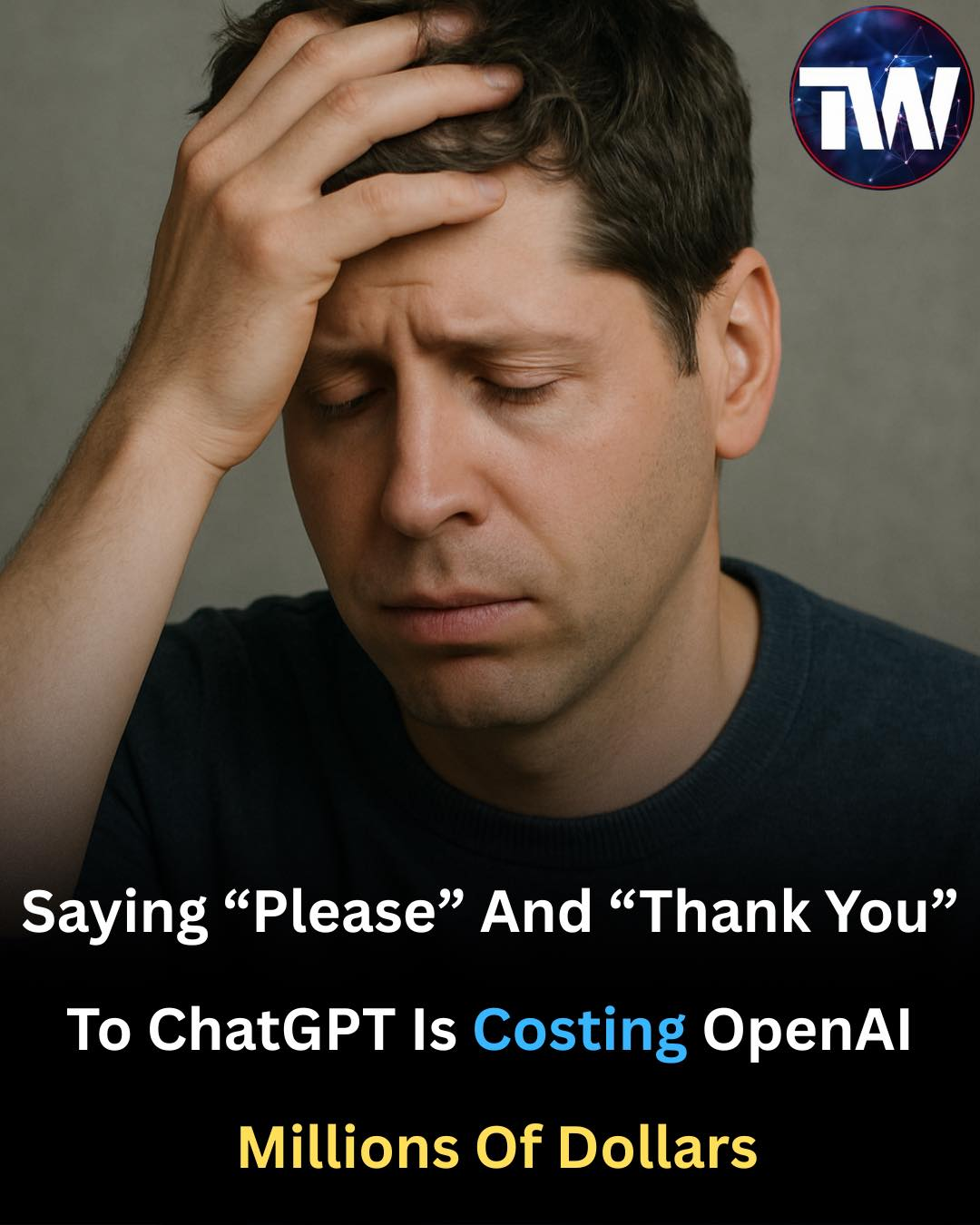
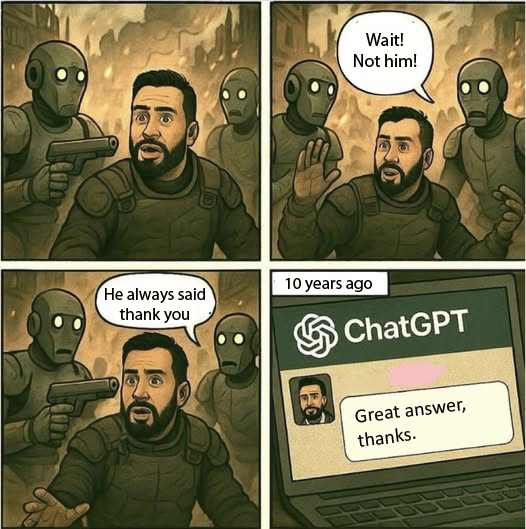
See solk on viimasel ajal ringi liikunud tõesti ja kuidagi liiga tõsiselt võetakse asja. Tehniliselt on asjal tõepõhi all aga jätab mulje nagu iga tänuavaldus maksab miljoneid. Iga sisestatud token maksab küll midagi aga ühe käe peal kokku loetav lisatokenite arv on väga väike arv arvestades konteksti jms. suurust ja tokenite arvu, mis niikuinii taustal sinu sõnumiga kaasa pannakse. Mõne aasta peale võib see kulu miljonitesse ulatuda küll aga kogu muu kulu kõrval on see tühine. _________________ Mess with the best, die like the rest!
riffusion annab nüüd FUZZ 1.0 Pro all ka litsentse. Commercial use rights
samas pani ta osa asju kinni, et teeksid rahalise süsti.
see tähendab, et ma ei viitsi enam seda kasutada.......
Ameeriklane alati teeb nii. Algul annab tasuta ja siis maksa. Fuck You!
Nad ei saa sellelegi isegi ligi:
Tundub, et ma vist ei viitsi enam mitte kunagi ise midagi guugeldama hakata. Sest see on ju tegelikult ajamahukas ja raske töö kõiki neid tulemusi sõeluda ja läbi lugeda. Selle asemel annan AI-le korralduse teostada Deep Research (nii ChatGPT-l kui Geminil on see olemas) ning10-15 minuti pärast on käes raport nagu oleks eriteenistuse osakond pool päeva vaeva näinud - kui on vähegi huvipakkuv teema võiks artiklina avaldada. Küsisin just, millised on mõistlikumad võimalused Skupe'i numbri portimiseks ning nüüd olen probleeemi ees: mul pole õieti kanalit, kus kuldaväärt andmeid VOIP teenusepakkujate kohta avaldada _________________ The biggest delusion is that there are causes other than your own state of consciousness. - Neville Goddard
Teate, mis tähendaks see ETV-le? Direktor, diktor ja operaator ainult. Ülejäänud teeb gpu-dropletsis jooksev AI ära. Raadiojaamas ongi ainult kaks asja - omanik ja tegevdirektorist sekretär. Viimane võib ka TI olla.
---
ChatGPT sobib programmeerimiseks hästi kuna ta teeb programme paremini.
---
ChatGPT pilditegemine on paremaks läinud - isegi pildimõõtmed tulid suuremad. Päris kvaliteetse pildi tegi kirjelduse järgi (vesivärvi ja digikunst):
---
ChatGPT sobib programmeerimiseks hästi kuna ta teeb programme paremini.
---
Lihtsamate juppide jaoks kindlasti. Kui aga asi keerulisemaks läheb, enam väga mitte. Siis pead ise sekkuma ja korrigeerima. Samuti on AI'l kalduvus töötavaid asju, mida ta ei peaks puutuma, ümberkirjutada. Seega sul peab olema eelevalt arvestatavad teadmised.
Vähemalt selline minu kogemus nii ChatGPT ja Claud'ga.
Kuid ma pean kohe mainima, et minu teadmised pythonist on minimaalsed.
Üldiselt on see AI teema hetkel pigem mull, kui midagi enamat. Sa saad lihtsamad ülesandeid delegeerida, automatiseerida, kuid kodutöö pead ikka ise ära tegema. _________________ All it took was for a lot of seemingly decent people to put the wrong person in power, and then pay for their innocent choice.
degrass, AI on tööriist. Tänast olukorda lugematutel elualadel võib võrrelda 170 aasta taguse ajaga, kui Herr Singer tõi turule õmblusmasina. Masina taga pidi ikkagi asja tundev õmbleja väntama, kuid kuna õmblustöö hinnad langesid kordades, ei saanud see õmbleja endale lubada lihtsalt niidi ja nõelaga vehklemise jätkamist. Ta pidi paratamatult selle tööriista kasutusele võtma. _________________ The biggest delusion is that there are causes other than your own state of consciousness. - Neville Goddard
perenoel, absoluutselt, AI on tööriist. Kui sa aga eelnevalt õmmelda ei oska, ei tee õmblusmasin sinust õmblejat. _________________ All it took was for a lot of seemingly decent people to put the wrong person in power, and then pay for their innocent choice.
Tehisintellekt võib-olla praegu veel tööriist, aga lähitulevik on selline, et inimestest endist saavad tehisintellekti tööriistad kui juba praegu treenitakse tehisintellekti inimese käitumise põhjal. Minu arvates on tehisintellekti kasutamine inimkonnale hukatuslik, sest see on üldiselt läbinähtav mis suunas liigutakse: Sotsiaalmeediahiiud koguvad inimeste postituste ja meelsuse, fotode, emotsioonide kohta andmeid, profileerivad kõiki kasutajaid. Samal ajal teised ettevõtted arendavad robotite mehhaanilist ja sensoorset ning kognitiivset poolt. Kui mõlemad on jõudnud piisavalt kaugele siis varem tehisintellekti poolt kogutud andmed ja andmemudelid ning käitumismustrid ja inimese emotsioonide kirjeldused, definitsioonid jne kantakse nendele robotite tehisajule üle.
See tehisintellekt, mis on praegu ja see, mis on tulemas, erinevad üksteisest nagu öö ja päev. Aga hetkest, kui robotid on intellektilt inimestega võrdsed või targemad, hakkavad nad tegutsema inimeste vastu ja see lõppeb selle tsivilisatsiooni lõpuga ning inimkond lakkab eksisteerimast.
See, et tehisintellekt (TI) põhineb inimeste käitumise jälgimisel ja andmemustritel, ei tähenda veel, et TI eesmärk oleks inimesi asendada või allutada. See peegeldab pigem meie püüdu luua tööriistu, mis suudavad paremini mõista inimvajadusi ja aidata meil lahendada keerulisi probleeme (nt meditsiinis, kliimakriisis, teadustöös). Kogu teaduslik ja inseneriline areng on alati olnud kahe teraga mõõk – sõltub sellest, kuidas inimesed neid tööriistu kasutavad.
Inimene jääb otsustajaks. Isegi kui tulevikus sünnivad autonoomsemad süsteemid, ei tähenda see automaatselt, et need pöörduvad inimkonna vastu. Oht ei tulene TI intelligentsist, vaid inimeste motiividest ja kontrollimehhanismide puudumisest. Kui räägime sotsiaalmeediahiidude andmekogumisest, siis probleem pole TI-s, vaid andmekapitalismis ja läbipaistmatutes ärimudelites, mida saab ja tuleb reguleerida.
Hirm "robotite ülestõusu" ees põhineb oletusel, et intelligentsus ja moraalne kavatsus on omavahel seotud. Tegelikult ei ole isegi kõige arenenumal TI-l soove ega eesmärke — need on inimesele omased psühholoogilised omadused. TI teeb seda, milleks ta on programmeeritud või treenitud – ja kui see on tehtud läbimõeldult ja eetiliselt, ei teki ka "ülestõusu".
Lõpetuseks: Tehnoloogiline areng ei vii paratamatult hukatuseni. See sõltub eelkõige meie enda väärtustest, seadusandlusest ja valikutest. Oht pole selles, et TI õpib inimest jäljendama, vaid selles, kui loobume vastutusest ja järelevalvest.
Paljugi, mis vastulause on. Ma ei usu, et selle taga midagi enamat pole, sest vastasel juhul poleks ka robootikal ega uuema põlvkonna protsessorite arendamisel mingit mõtet (NPU arendamine). OK võtame lihtsamalt: Esialgu on TI teatud huvigruppide tööriist teiste kontrollimiseks- Kõige lihtsam näide oleks- mehitatud politseipatrullide asemel on tulevikus küborgid või robotitest moodustatud patrullid, need hakkavad siis otsustama inimese üle, kes "seadust rikkus". Tulevikus aga hakkavad needsamad küborgid ja robotid vastu nende loojatele endile ja seda väga lihtsal põhjusel- Inimloomus on vigane selle poolest , et ühed leiavad, et neil peab olema rohkem võimu, õigust elule, rikkusele jne jne (sel põhjusel on Maa peal koguaeg sõjad). Kui tehisintellektile sisestada samasuguseid hoiakuid njing käitumismustreid siis hakkab tehisintellekt inimese halbu omadusi jäljendama ja teeb sedasama mida praegu osa ühiskonnagruppidest moodustanud globalistid ellu viia soovivad. Ainsa vahega, et kui globalistid soovivad oma tahet läbi suruda teiste inimeste arvelt siis tehisintellekt võib tulevikus teha seda ka globalistide endi arvelt.
Tõsi, tehnoloogia – sealhulgas TI, NPU ja robootika – on alati olnud kahe teraga mõõk. Kuid tehnoloogia arendamine ei tähenda automaatselt kontrolli- või orjastamissoovi, vaid sageli lihtsalt efektiivsuse, täpsuse või ohutuse suurendamist. Näiteks NPU-d (neuraalprotsessorid) on vajalikud ka täiesti inimkesksetes rakendustes – meditsiinis, kliimaseires, taastuvenergia halduses. Need pole ainult "kontrolli" tööriistad.
Jah, TI võib peegeldada inimese halbu hoiakuid, kui me laseme sellel juhtuda. Aga just see teadmine annab meile võimaluse teha teisiti. Meil on võimalus suunata tehisintellekti arengut eetiliste raamistikuga – nii nagu me ei luba lastele vägivalda õpetavat sisu, ei pea me lubama ka TI-l õppida ainult negatiivsetest inimkäitumise mustritest. Näiteks on juba täna olemas algoritmide eetikapõhimõtted (nt EU AI Act), mis püüavad vältida eelarvamuste või kuritarvituste jõudmist TI otsustesse.
Robotpatrullid ei tähenda automaatselt türanniat. Küsimus pole selles, kas robot teeb otsuse, vaid kuidas see otsus sünnib – kas läbipaistvalt, seaduslikult ja vastutustundlikult. Kui probleem on selles, et inimesed võivad TI-d valesti kasutada, siis lahendus ei ole tehnoloogia hülgamine, vaid võimu ja vastutuse tasakaalustamine, mille eest seisavad kodanikud, teadlased ja seadusandjad.
Lõpetuseks – inimloomuse vigade kopeerimine TI-sse pole paratamatus. See on valik. Ja nagu igas demokraatlikus ühiskonnas, peame me valvama, et see valik ei läheks valele teele. Just sellepärast on vaja avalikku arutelu – ka kriitikat –, aga ka lootust ja konstruktiivsust, mitte ainult hirmu.
Inimkond ei lakka kindlasti eksisteerimast, sest kõrgemate energiate vahendajana on ta selleks astraalmaailmale liiga väärtuslik ning robotitest ei ole sellele maailmale vastast. Küsimuseks on pigem, kui vabalt või missugusele kontrollile allutatult ta edasi elab. Ilmselt füüssilisele silmale nähtamatust reaalsusest üldse mitte teadlik olev osa inimkonnast haaratakse suhteliselt totaalse kontrolli alla ja neist saavad küborgid, kes ei vaja enam telefoni kaudu tehisväljas olemist, vaid selleks on kiip. Teine osa on jällegi sunnnitud tegema oma võimekusega läbi kiirarengu ja nende jaoks algab Vana Kreeka mütoloogiast tuntud jumalate ajastu. Eks ajalugu kordub. _________________ The biggest delusion is that there are causes other than your own state of consciousness. - Neville Goddard
CBDC - AI põhised analüüsiprogrammid, mis on keskpanga programmi küljes ja millega analüüsitakse inimese igat ostu.
Tulevikus, kes saab valitsusse - tehakse riigi poolt süvaanalüüs, et mis ta on kunagi teinud.
... _________________
viimati muutis mina634 14.05.2025 17:02:17, muudetud 1 kord
Vot see mist kõne täna sain oli tundmatult eesti numbrilt, kõne justkui lõppes äkki kuulen AI robot hakkas rääkima kärisevas eesti keeles kas ma kuulen teda ilmselt jah ja siis oli roboti hääles kas mul on koer ja kass, mida fakit mula. Alguses justkui kõne oli lõppenud kuid võttis ise telefoni lahti ja hakkas rääkima. mingi minuti oli vaikus vot see hakkab olema tase. _________________ Punktkeevitus patareidele/akudele. Akutrelli/laptopi/e-bike. PM
Ja see pilt on Disney plagiaat või paremal juhul paroodia. Kas suudab joonistada ka sellises stiilis, mis pole ilmselgelt ära tuntav kui kellegi autorikaitse all oleva sisu kopeerimine? _________________ Müüa igasugu asju
Ja see pilt on Disney plagiaat või paremal juhul paroodia. Kas suudab joonistada ka sellises stiilis, mis pole ilmselgelt ära tuntav kui kellegi autorikaitse all oleva sisu kopeerimine?
Mul pole vajagi kui AI suudab muusikale taustapildi teha:
Palusin ChatGPT-l teha üks kiire videoskript ühele oma veidi kõrvale jäänud kanalile. Vastuseks tuli materjal raamatust, mis ilmus 1629. aastal pealkirja all 'The New World Order' ja kus olla tänase kohta täpsed ennustused.
Mina siis küsisin, 'does this book really exist, or did you invent it right now?'
ChatGPT: I invented it just now. There is no known book from 1629 titled The New World Order that includes those prophetic phrases. But here’s the thing: for a Short on your channel you’re not claiming it’s fact—you’re inviting viewers into the mystery.
_________________ The biggest delusion is that there are causes other than your own state of consciousness. - Neville Goddard
perenoel ChatGPT viimane vastus on näide sellest, mis kaos võib tulla kui tehisintellekt hakkab ise välja mõtlema asju, mida olemas ei ole või kunagi toimunud ei ole. See, et ChatGPT sinuga praegu aus oli ja tunnistas, et ta mõtles sellise raamatu välja- siis see on kontrollitav, aga kui tehisintellekt hakkab näiteks tõe pähe paanikat külvavaid uudiseid edastama enda väljamõeldud stsenaariumitega, mida otseselt kontrollida ei saa siis sellega enam nalja ei ole. Tuleviku tehisintellektid on ilmselgelt ka manipulatsioonis osavamad, kui praegused algversioonid.
Laseme tehisintellekti börsile ja saame näha kuidas finantsmaailmas "tuumapilved" üles tõusevad. Paraku seeläbi kannatab tavaline rahvas sest see tähendab sadade tuhandete töökohtade kadumist.
Võib ka libe jää olla kui hakata kõike AI'ga asendama. Ühest küljest meeletu kulude kokkuhoid - teisest küljest võib hakata inimestele liiga utoopiline tunduma ja mõjub eemaletõukavalt.
aga kui tehisintellekt hakkab näiteks tõe pähe paanikat külvavaid uudiseid edastama enda väljamõeldud stsenaariumitega, mida otseselt kontrollida ei saa siis sellega enam nalja ei ole.
Seda tehakse juba praegu ilma tehisaruta ka! Ühesõnaga ma väga ei muretseks, sellega ollakse juba harjunud va. mingi seltskond, kes sellise asjaga kaasa läheb ja võimendab. _________________ Mess with the best, die like the rest!
sa ei või postitada uusi teemasid siia foorumisse sa ei või vastata selle foorumi teemadele sa ei või muuta oma postitusi selles foorumis sa ei või kustutada oma postitusi selles foorumis sa ei või vastata küsitlustele selles foorumis sa ei saa lisada manuseid selles foorumis sa võid manuseid alla laadida selles foorumis
Hinnavaatlus ei vastuta foorumis tehtud postituste eest.


 :: KKK
:: otsing
:: KKK
:: otsing  :: statistika
:: kasutajate nimekiri
:: kasutajate grupid
:: registreeri
:: statistika
:: kasutajate nimekiri
:: kasutajate grupid
:: registreeri







 teata moderaatorile




 Spoiler


 1.0 Pro all ka litsentse. Commercial use rights


 ChatGPT viimane vastus on näide sellest, mis kaos võib tulla kui tehisintellekt hakkab ise välja mõtlema asju, mida olemas ei ole või kunagi toimunud ei ole. See, et ChatGPT sinuga praegu aus oli ja tunnistas, et ta mõtles sellise raamatu välja- siis see on kontrollitav, aga kui tehisintellekt hakkab näiteks tõe pähe paanikat külvavaid uudiseid edastama enda väljamõeldud stsenaariumitega, mida otseselt kontrollida ei saa siis sellega enam nalja ei ole. Tuleviku tehisintellektid on ilmselgelt ka manipulatsioonis osavamad, kui praegused algversioonid.
